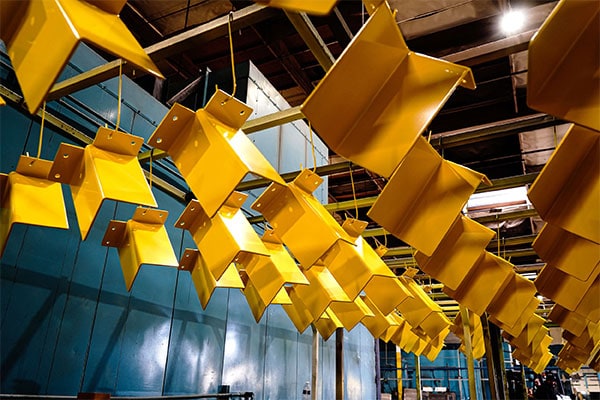
The process involves suspending the powdered material in an air stream, creating a fluidised bed of powder that allows for a uniform coating of the substrate.
This process is a versatile and efficient method that can be divided into five main steps:
1. Cleaning the substrate of the object to be coated
2. Storage of plastic powder in a container with special equipment for blowing air in a modular and uniform manner
3. Preheating of the object, typically 180 to 220 degrees Celsius
4. Immersion in the fluid bed where the powder particles adhere to the surface creating a uniform coating, this usually takes a few seconds as shown in the video opposite with a laboratory sample
5. Curing and hardening of the coating through subsequent heating of the finished object, the time and temperature may vary depending on the shape and size of the object
The resulting polyethylene coating guarantees durability, chemical resistance and abrasion resistance.